Transitional Kindergarten (5-6 years)
Our Transitional Kindergarten Program: Where Deepening Inquiry Builds The Foundation for School Success
Our Transitional Kindergarten (TK) serves as a purposeful bridge, not just toward elementary school, but toward a lifelong identity as a researcher, a problem-solver, and a collaborative creator. We believe this pivotal year is a celebration of who the child is right now—honoring their unique voices and abilities while gently cultivating the confidence and curiosity they need to thrive. By weaving academic readiness with the joy of discovery, we prepare children for the journey ahead while celebrating their individual strengths and perspectives. Our TK program builds upon the foundational skills developed in our preschool years, nurturing early literacy, mathematical reasoning, critical thinking, and social-emotional confidence, within a joyful, play-based environment. We deepen these foundations by transitioning from spontaneous discovery to sustained, long-term inquiry. As children mature, their questions grow more complex, and we support this shift by inviting them to design their own experiments, collaborate on intricate group projects, and articulate their evolving theories about the world.
How We Support your Transitional Kindergartener’s Learning Journey
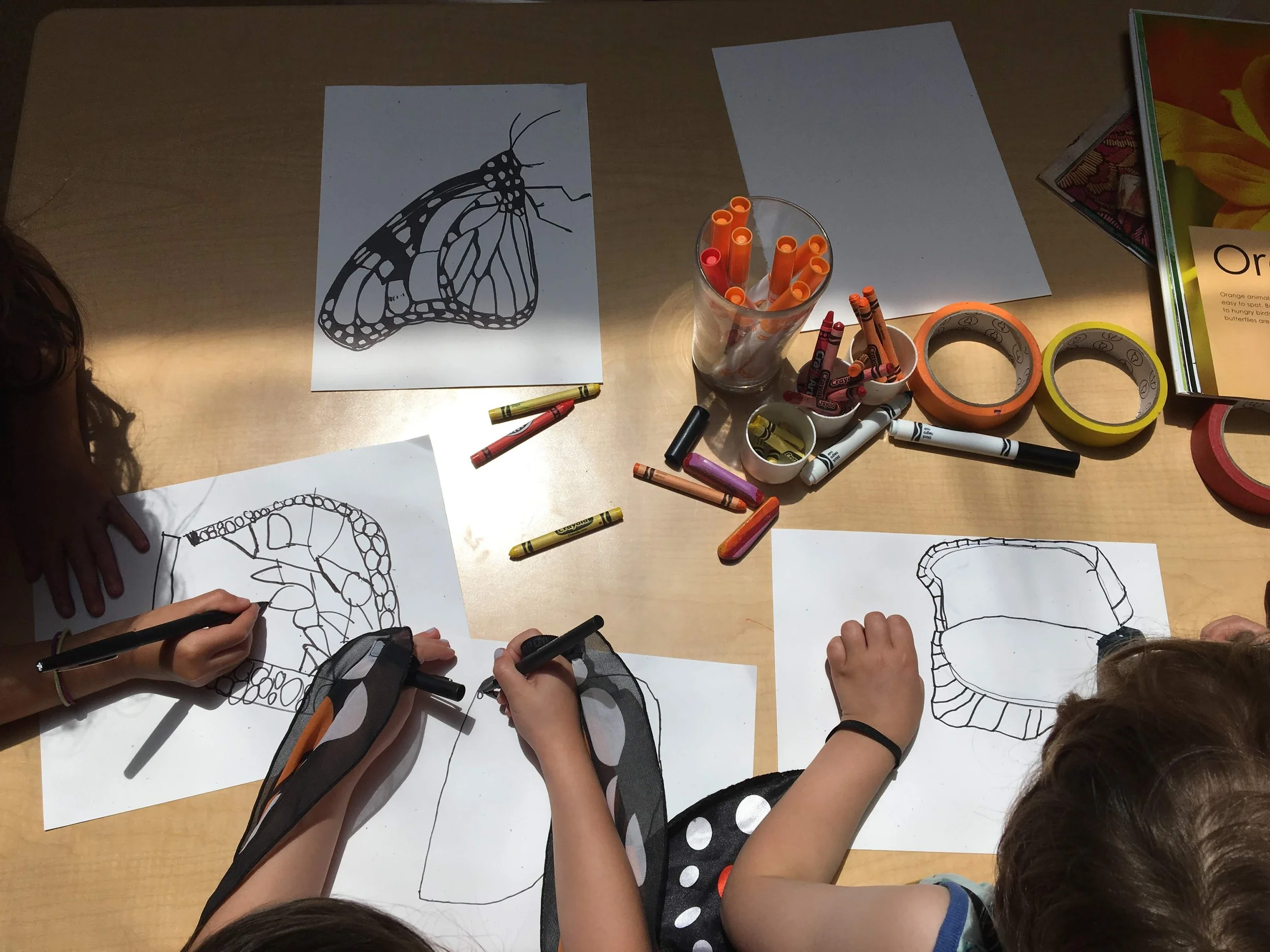
Literacy as Storytelling: We approach literacy as a dynamic means of expression. Through daily read-alouds, phonics, and writing workshops, children learn that their ideas have power. Whether they are labeling their own creations, keeping personal journals, or dictating their stories to educators, they find joy in the "hundred languages" of literacy, building the fluency and confidence to share their unique voices.
Mathematical Relationships: We explore math as a language of patterns, logic, and beauty, far beyond the limits of a worksheet. By sorting natural items, building structures, and measuring ingredients or distances, children discover the order within patterns. Whether balancing blocks to test volume or creating repeating designs with shells, they are actively developing the logical thinking and spatial reasoning they will use to make sense of the world.
Scientific Investigation: Our classrooms serve as laboratories of wonder. Children practice scientific inquiry by observing lifecycles in the garden, testing the buoyancy of natural materials, or documenting the changing seasons. By directly manipulating the natural world, they develop the analytical spirit needed to test their own hypotheses and understand the mechanics of their environment.
Social Studies & Community: We help children find their place within the collective. Through interactive exploration of geography and human relationships, we foster a profound sense of belonging. Children grow to see themselves not as isolated individuals, but as vital, contributing members of a larger community.
The Foundation of Collaboration
At this stage, independence and collaboration are deeply intertwined. Our students tackle complex, long-term projects that require teamwork, negotiation, and resilience. Teachers guide these investigations, asking pertinent questions that challenge students to deepen their inquiries, question their assumptions, and make connections between their observations and their discoveries. By prioritizing purposeful play, we ensure every child enters their next chapter with a strong sense of self and a genuine, enduring love for learning.
Safety and Licensing