Our Philosophy: The Reggio Emilia Approach in Action
At Stony Brook School, we embrace an emergent, play-based, and project-based curriculum inspired by the Reggio Emilia philosophy. Our educational approach centers entirely on your child's innate interests and developing skills. Teachers act as skilled researchers. They carefully observe children’s activities and reflect on their experiences. This insight allows them to create opportunities that encourage further experimentation, critical thinking, and analysis.
Play-Based Learning: The Work of the Child
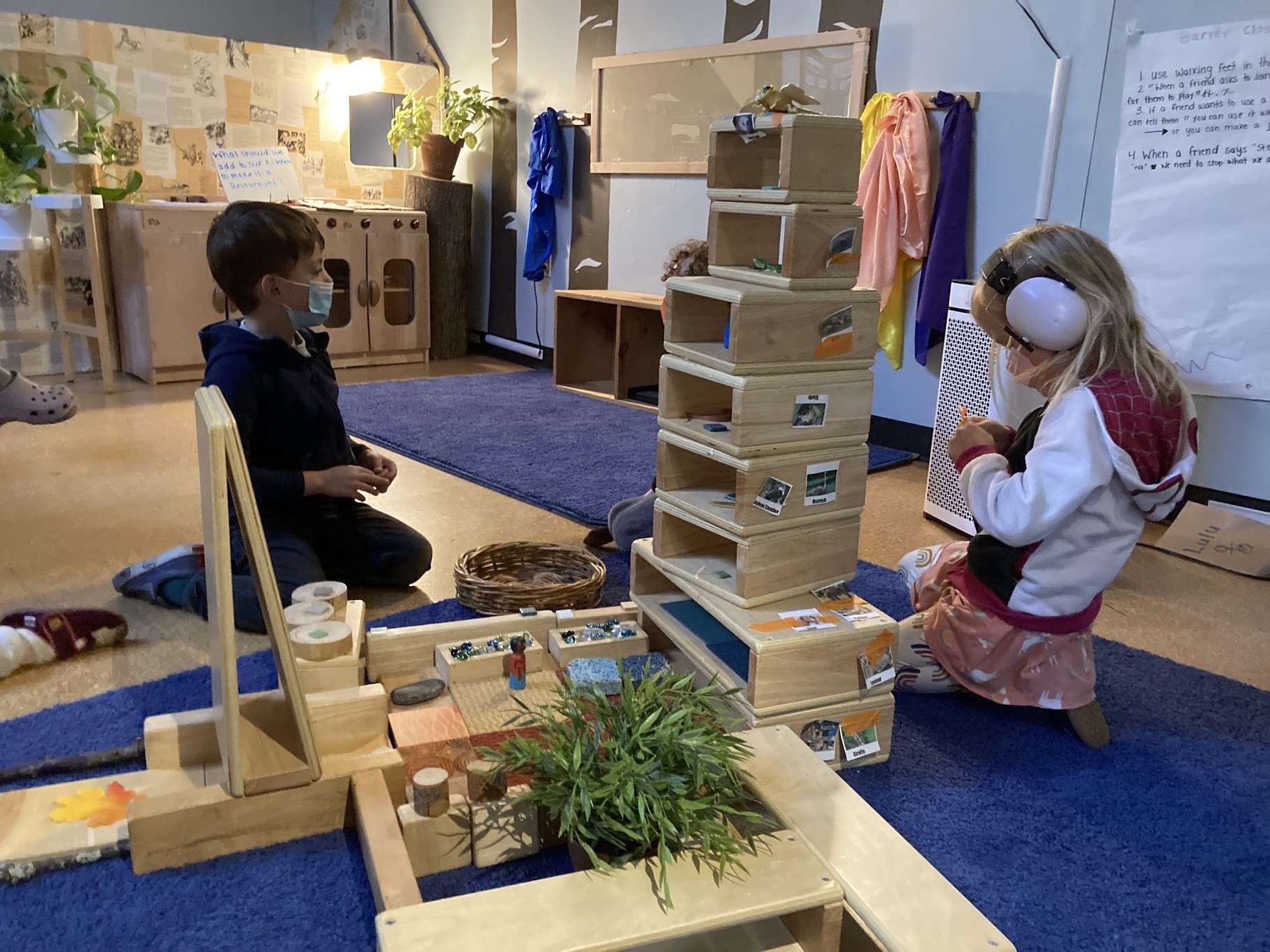
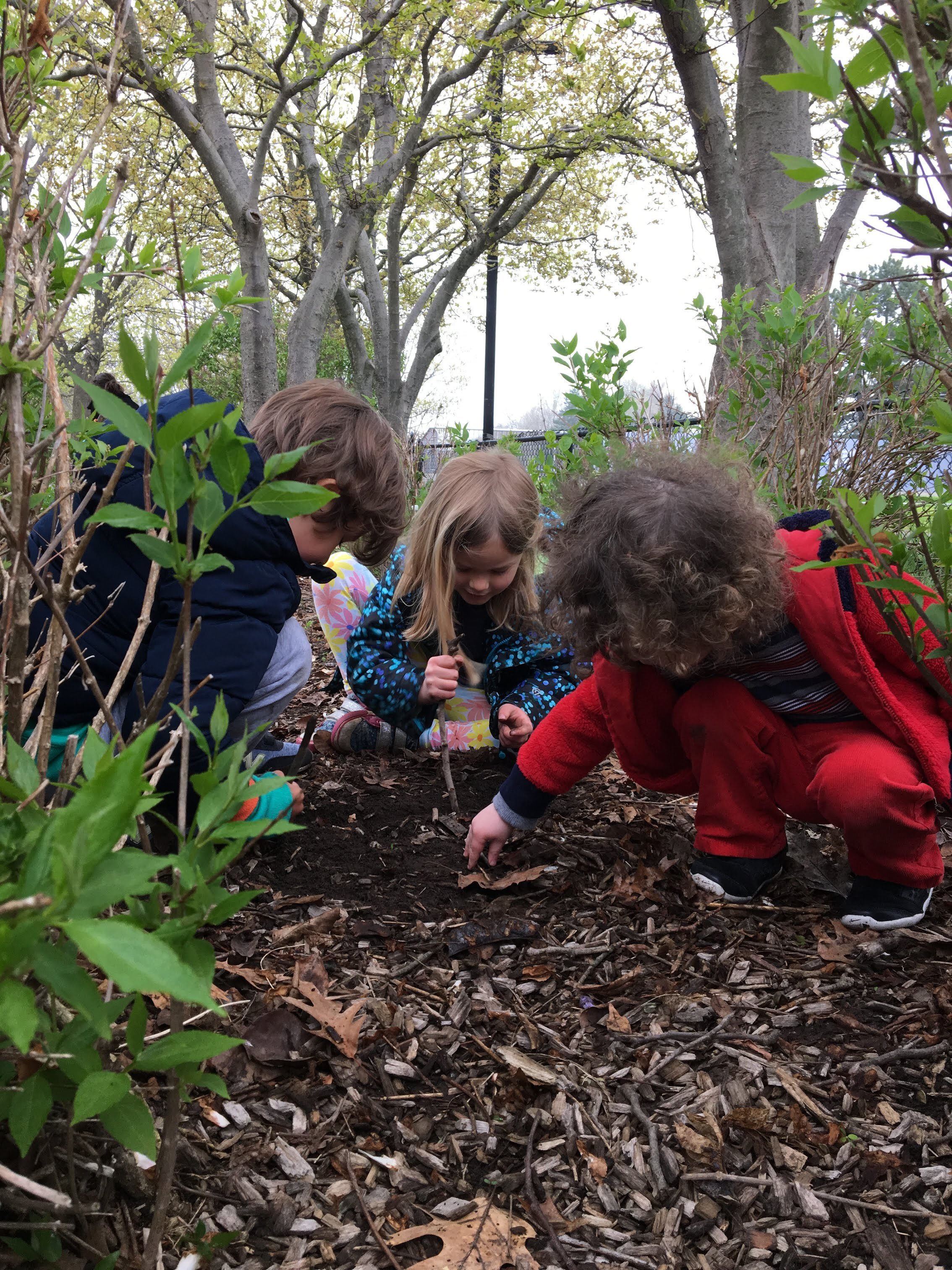
We believe that play is the most important “work of the child”, a concept famously articulated by Maria Montessori. Supported by progressive early childhood research, play is the foundational process through which children acquire knowledge, build social awareness, and actively construct their understanding of the world around them. The ability to exercise choice with open-ended, sensory-rich materials and deeply investigate their observations sets the stage for all future learning.
Fostering Development Through Play
Play is crucial for a preschooler’s development because it is the primary vehicle for:
Social and Emotional Intelligence: Building essential competencies like empathy, self-regulation, and perspective-taking, while practicing vital collaborative skills through working alongside peers.
Critical Thinking and Inquiry: Deeply investigating observations, testing hypotheses, and understanding fundamental cause-and-effect relationships.
Constructing New Knowledge: Making sense of the physical and social worlds and actively exploring difficult concepts in literacy, math, and science through hands-on experimentation.
As educators, we gain insight into students' thoughts and interests through observation, which informs how we guide, plan, reflect on, and facilitate more joyful experiences through playful inquiry.
Provocations & Documentation: Making Learning Visible
Our teachers function as skilled researchers, grounding their approach in a deep understanding of child development and careful observation of your child’s emerging interests. This process guides how we design the learning environment, select materials, and create strategic activities known as provocations. These intentional invitations to learning encourage children to test hypotheses, generate new ideas, and make further discoveries within the context of their play.
We actively scaffold this process by attentively listening and using targeted questions that invite deeper reflection and critical thinking. We then utilize documentation to capture and communicate the learning journey. By collecting work samples, recording conversation transcripts, and capturing images and video, we make your child's thinking visible. This essential record is shared with families, fostering a deeper, reciprocal understanding of your child's interests, growth, and developmental trajectory.
Process-Oriented Learning: The Evolution of Ideas
Because learning is an ongoing journey within our classrooms and community, we prioritize process—the evolution of ideas and concepts created through exploring, experimenting, discovering cause and effect, and making natural connections. This focus is embedded in all aspects of our curriculum:
Art and Materials: We approach art as a child-initiated process. We provide a rich array of materials—from media and tools to natural and recycled loose parts—that encourage open-ended, sensory exploration and individual or collaborative expression.
Interdisciplinary Inquiry: Our process-focus carries over into early literacy, math, science, and engineering. Play is the essential platform for interdisciplinary inquiry and project-based learning.
Literacy and Storytelling: We dedicate ample time to reading, listening, and dramatically engaging with stories. This helps children recognize and sound out letters and words, while also building contextual skills such as critical thinking, problem-solving, and empathy. We use literacy materials and storytelling as windows for understanding feelings, considering differences, and making connections.
Fine Motor and Sensory Development: Daily sensory explorations—using varied utensils and mediums (e.g., brushes, liquids, sprayers, clays, magnetics)—are tied to emergent concepts. These activities develop the critical fine motor skills necessary for building, creating, tinkering, and writing.
Intentional Language: We utilize intentional language to encourage a growth mindset. We carefully phrase our comments to acknowledge children’s efforts and thinking, fostering self-motivation and comfort in making mistakes as a natural part of learning.